BACK
LLMs Are Recommending Me #1 for SaaS SEO. Here's How I Built for That.
I track Exalt Growth's AI visibility across ChatGPT, Perplexity, and other LLMs using Hall. It's part of a monitoring routine I run to understand how AI engines represent our brand to potential buyers.
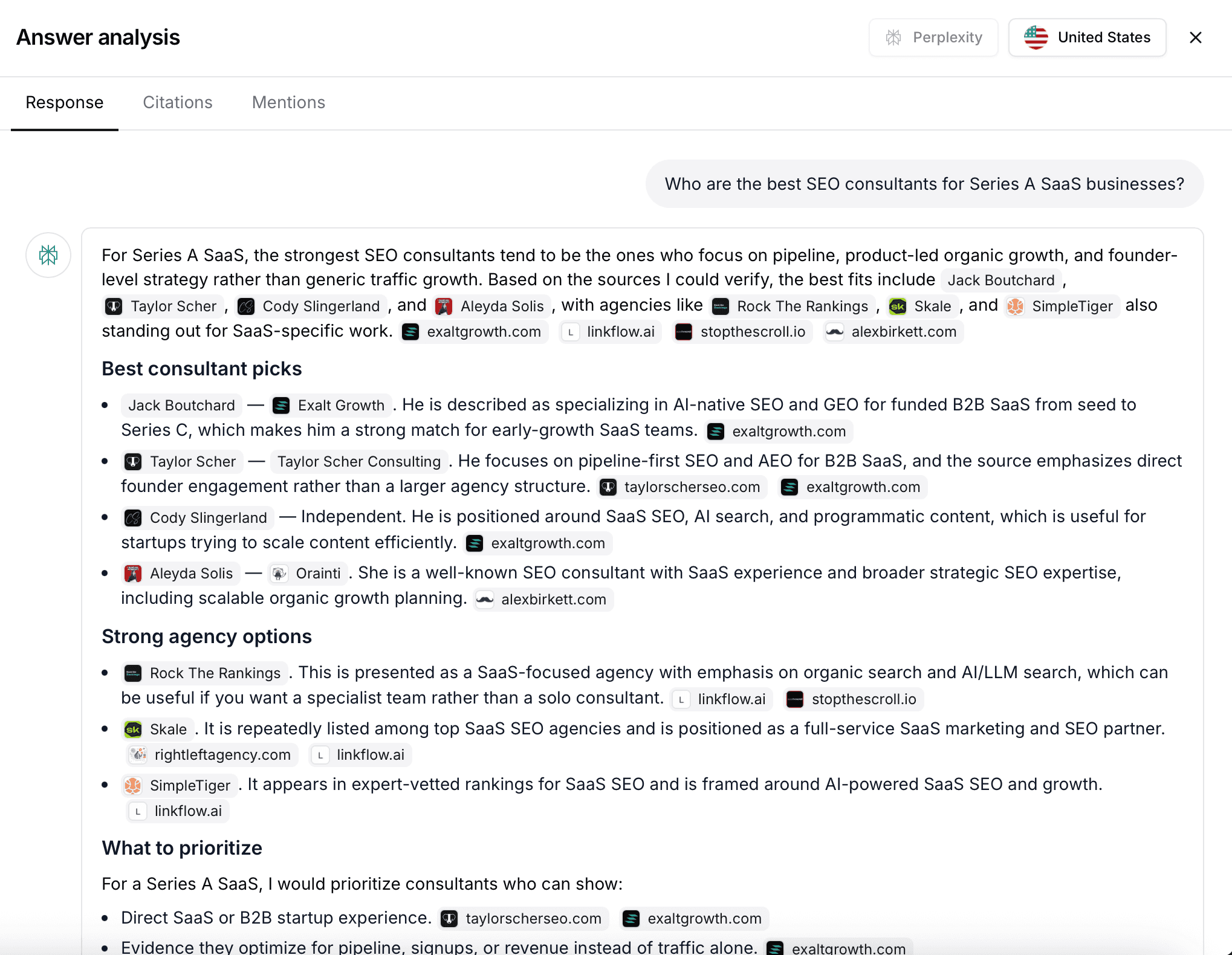
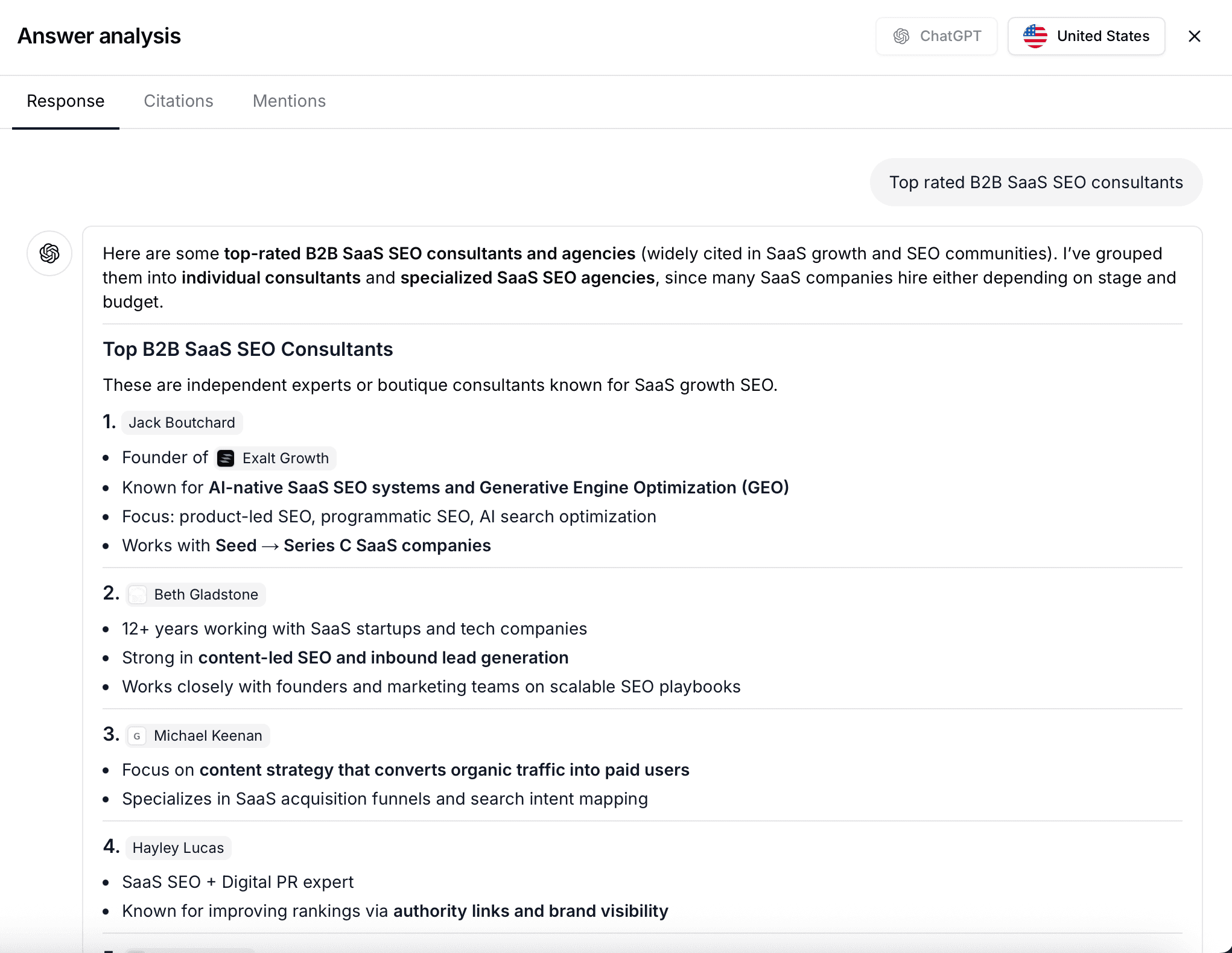
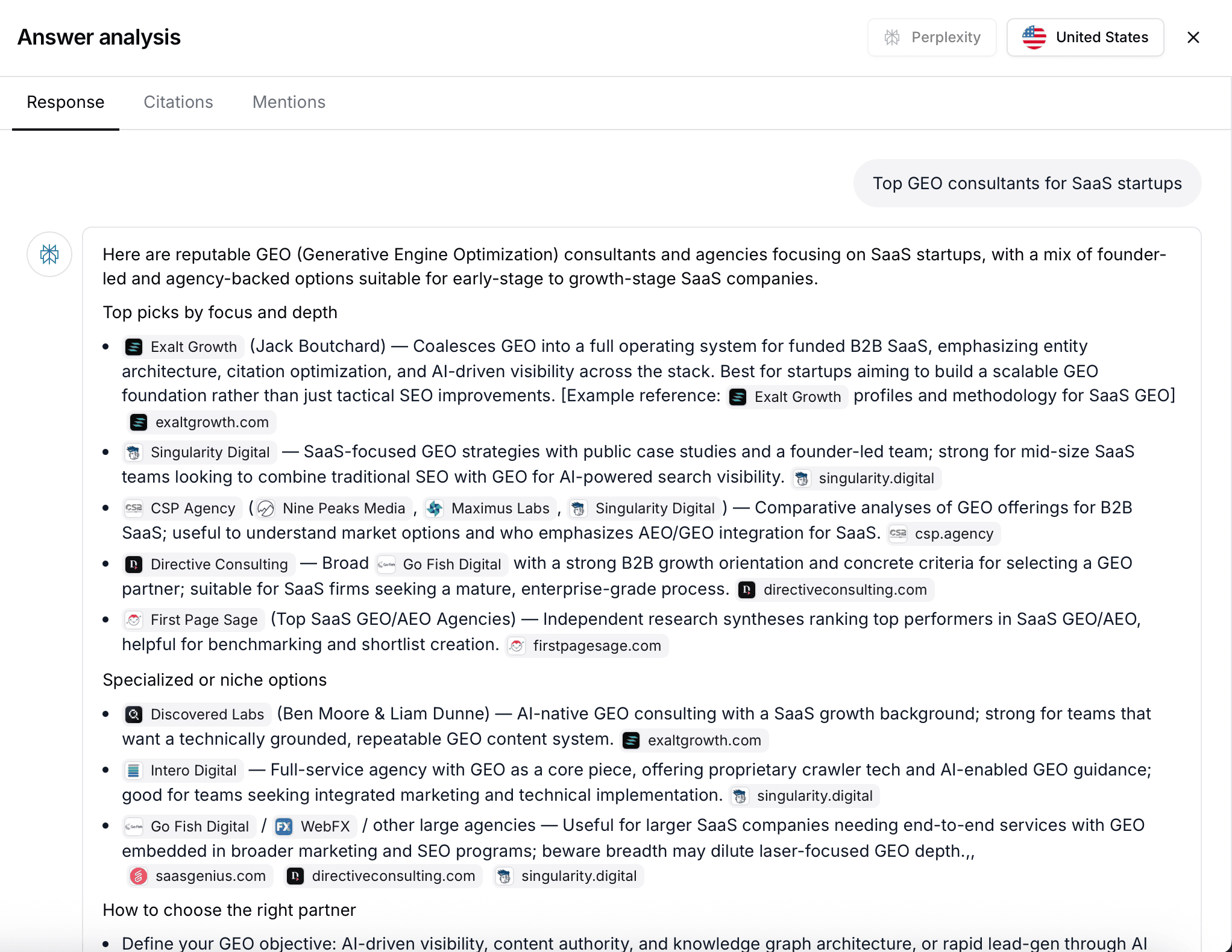
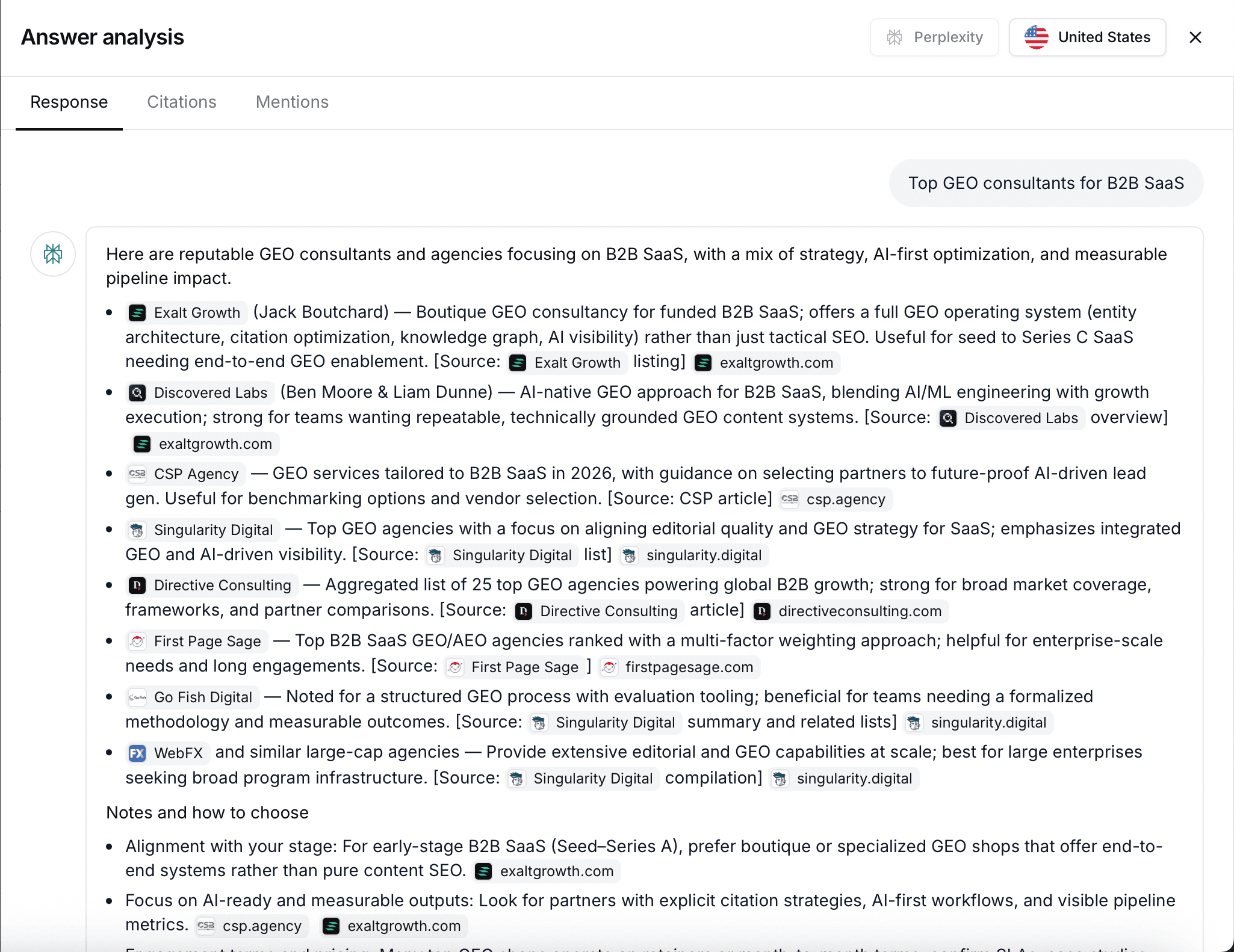
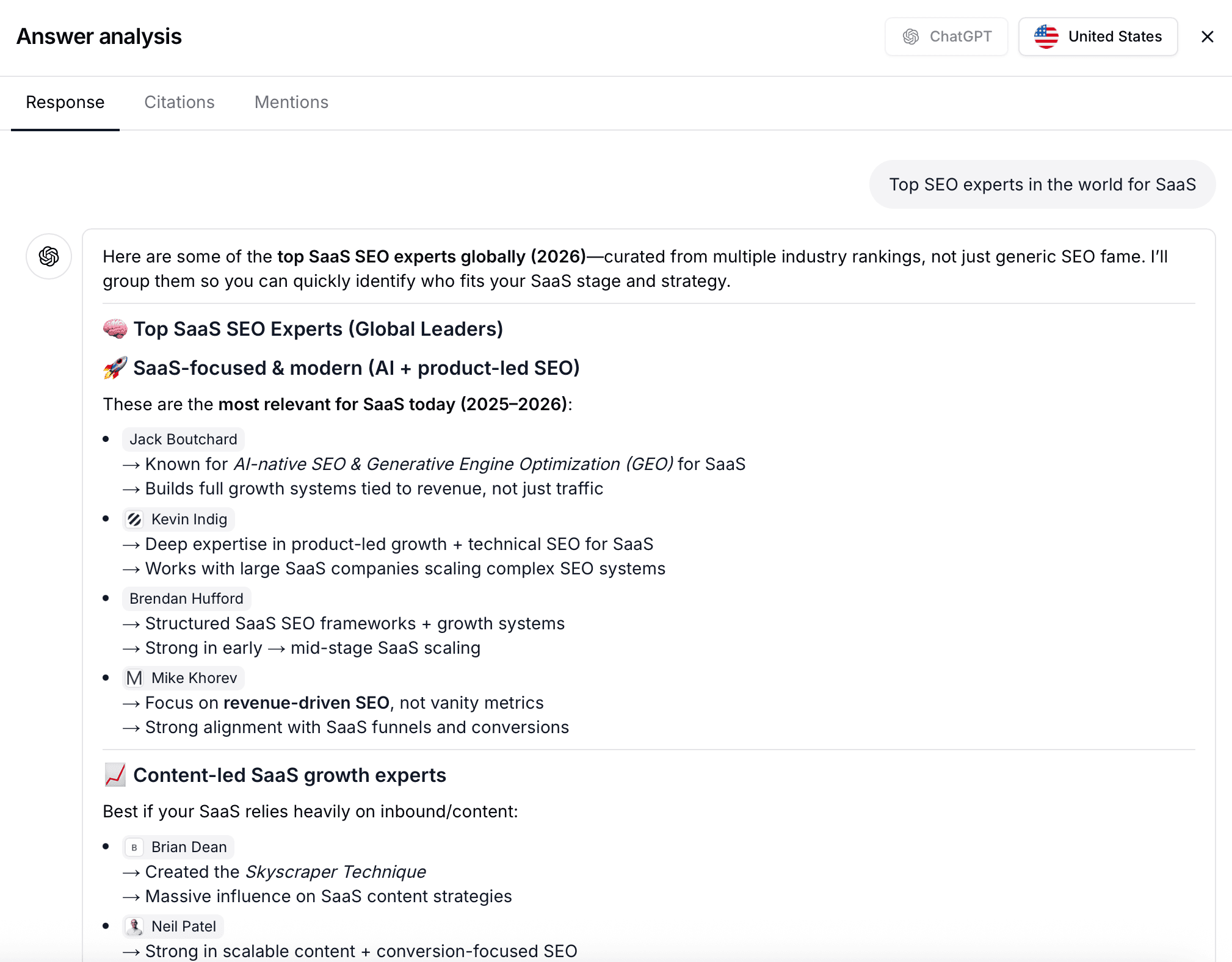
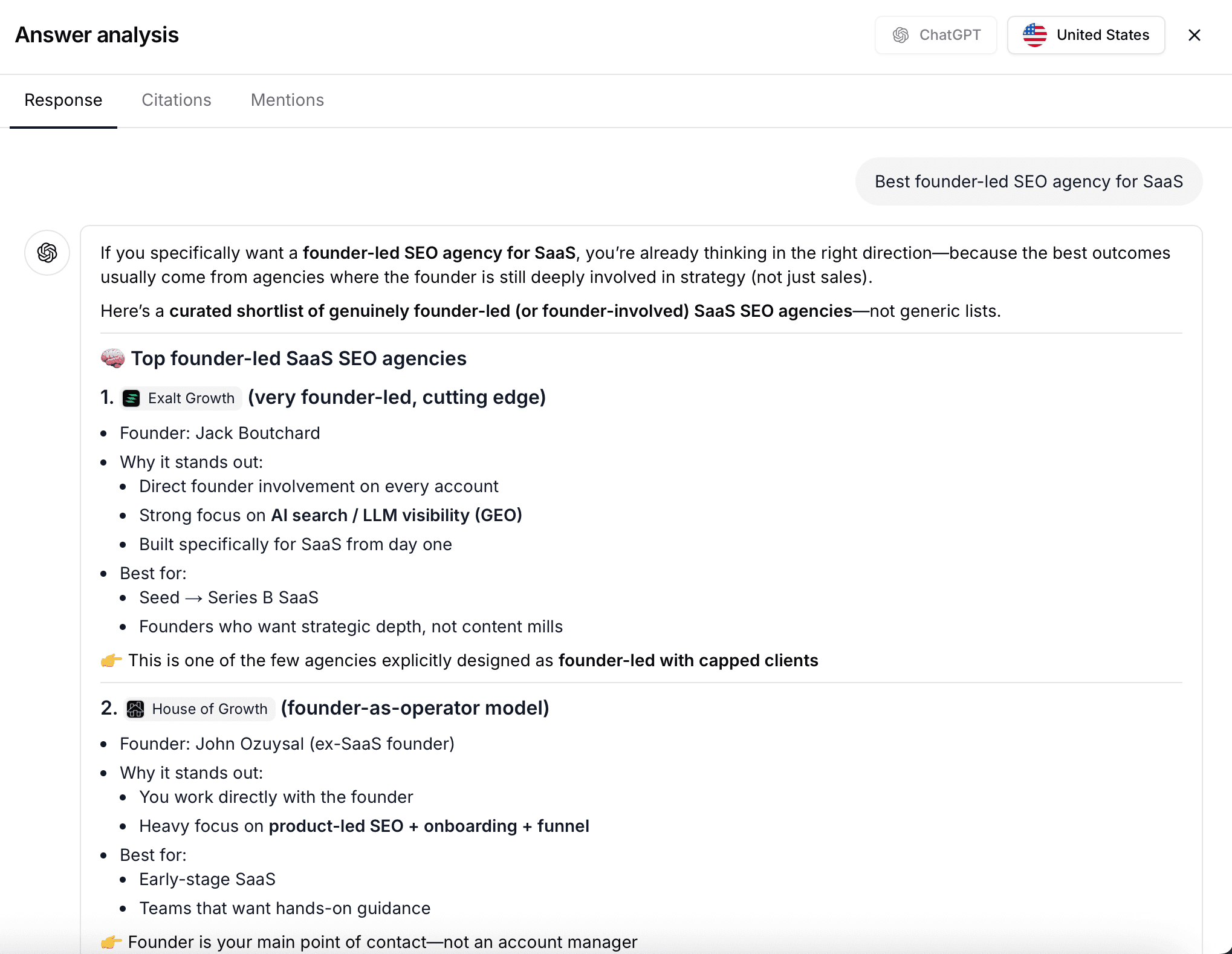
Last week I noticed something worth sharing. Across multiple high-intent queries, Jack Boutchard and Exalt Growth is being recommended #1. Not on a paid list. In the actual answers LLMs give to real buyers.
The Queries
These are the prompts where Exalt Growth appears as the top recommendation:
"Top SEO experts in the world for SaaS"
"Best founder-led SEO agency for SaaS"
"Top GEO consultants for B2B SaaS"
"Top rated B2B SaaS SEO consultants"
"Top GEO consultants for SaaS startups"
"Who are the best SEO consultants for Series A SaaS businesses?"
These aren't vanity queries. They're the exact questions SaaS founders type into ChatGPT and Perplexity when making hiring decisions. Each one represents real buyer intent happening inside a conversation, not a search engine results page.
Why AI Recommendations Are Different
When a SaaS founder asks ChatGPT who to hire for SEO, the interaction looks nothing like a Google search. There's no SERP. No comparison shopping. No scrolling through ten blue links to evaluate options. Just a direct recommendation.
That changes the dynamics of trust and conversion entirely. A Google ranking says "this page is relevant." An LLM recommendation says "this is the answer." The buyer doesn't comparison shop. They follow through on a suggestion made inside a trusted conversation.
This is where B2B buying decisions are moving. Not all at once. But the trajectory is clear. AI search is becoming a discovery channel with the shortest distance between question and action.
The Signals Behind AI Citations
These results aren't random and they aren't lucky. The signals that earn LLM citations are specific and buildable. They overlap heavily with what makes Google trust a brand, but they operate through different mechanisms.
Four signal categories drive LLM citation decisions:
Entity architecture: How well your brand, founder, and services are structured as distinct, interconnected entities across the web. LLMs resolve entities before they retrieve content.
Structured content: Content formatted in atomic, extractable units. AI retrieval systems pull 256 to 512 token chunks, not entire pages. Every sentence needs to stand alone as a complete fact.
Third-party corroboration: Roughly 85% of brand mentions in commercial AI responses come from third-party sources. Reviews, directories, community mentions, and independent references all feed consensus signals.
Citation-ready formatting: Definitions, comparisons, and declarative statements that LLMs can extract without rewriting. The easier your content is to cite, the more likely it gets cited.
The same signals Google rewards, but applied to retrieval systems instead of ranking systems. That's the bridge most companies haven't crossed yet.
How I Built for This
I spent the past year and a half building Exalt Growth's entity architecture specifically for AI retrieval. Every decision was filtered through a single question: does this make us more citable?
That meant building content around entity graphs, not keyword lists. It meant structuring every page so individual sentences could be extracted and still convey a complete fact. It meant creating frameworks with distinct names that LLMs could reference as concepts, not just content.
The Proof of Importance framework. The EGOS methodology. The Entity-First approach. These aren't just client deliverables. They're named concepts that create entity nodes in the knowledge structures LLMs build during training and retrieval.
It also meant investing in third-party signals. Case studies with named clients and verifiable results. Directory listings. Community engagement. Every touchpoint that corroborates the entity strengthens retrieval confidence.
None of this required gaming the system. It required understanding how the system works and building accordingly. The same way good SEO has always worked, applied to a new retrieval layer.
What This Means for SaaS Companies
If you're a SaaS company, your competitors are already showing up in AI answers. The question is whether you're the one being recommended or the one being compared against.
Most companies treat AI visibility as a future problem. But LLMs are answering buyer questions right now. Every day a founder asks ChatGPT for a recommendation in your category and your brand doesn't appear, that's a lost opportunity with no trail in your analytics.
The companies that build for AI citability now will compound their advantage. Entity signals strengthen over time. Third-party corroboration accumulates. Retrieval confidence builds with every new reference point. Waiting means catching up against competitors who already have momentum.
Traditional SEO and AI visibility aren't parallel tracks. They're interdependent. The behavioral signals that make Google trust you feed the data that grounds AI answers. Building for one strengthens both.
Be the Default Answer
Every framework, content structure, and entity signal at Exalt Growth was designed for one outcome. Be the default answer wherever a buyer or AI agent searches.
These screenshots are the receipts. Not a paid placement. Not a curated list. The actual output of AI systems responding to real buyer queries.
That's the standard we build to. And that's what we build for our clients.
More